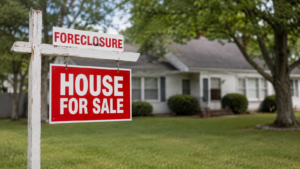
As pandemic-era options expire and borrower eligibility tightens, lenders and servicers should prepare for a potentially more active—and increasingly complex—default environment.
The federal loss-mitigation framework that helped many FHA borrowers remain in their homes following the COVID-19 pandemic has entered a new phase. Emergency programs have expired; certain forms of assistance are now more limited, and borrowers must meet updated eligibility requirements to receive permanent relief.
These changes do not mean that every delinquent FHA loan will proceed to foreclosure. They do, however, reduce the frequency with which some borrowers may access certain loss-mitigation options. For mortgage servicers, lenders, trustees, and investors, the shift reinforces the importance of early intervention, careful file review, accurate timelines, and close coordination throughout the default process.
What Changed?
During and after the pandemic, the Federal Housing Administration introduced and expanded several tools intended to help distressed homeowners resolve delinquent payments and avoid foreclosure. These options included partial claims, loan modifications, and other forms of payment relief.
A partial claim allows FHA funds to be used to address past-due amounts without immediately requiring the borrower to repay those funds. The assistance is generally secured by a subordinate lien that becomes payable when the primary mortgage is paid off, refinanced, or otherwise terminated.
Effective October 1, 2025, FHA transitioned away from its temporary COVID-19 Recovery Loss Mitigation Options and implemented a revised permanent loss-mitigation framework. Among the changes, borrowers are generally limited to one permanent home-retention option within a 24-month period, rather than the previously contemplated 18-month period. Certain borrowers must also demonstrate payment performance before becoming eligible for additional assistance.
FHA continues to maintain several loss-mitigation options, including repayment plans, forbearance, partial claims, loan modifications, and the Payment Supplement. The difference is that access is now governed by a more restrictive permanent framework rather than the broader emergency policies introduced during the pandemic. HUD’s April 2025 guidance explains the revised requirements and the expiration of the temporary COVID-19 options.
Why the Change Matters
For several years, expanded loss-mitigation programs helped delay or prevent foreclosure for borrowers experiencing financial hardship. As those temporary measures recede, some borrowers who fall behind may have fewer opportunities to repeatedly resolve a default through federally supported assistance.
At the same time, homeowners continue to face pressure from expenses that extend beyond principal and interest. Rising property taxes, homeowners insurance premiums, association assessments, maintenance costs, and general household expenses can make an otherwise manageable mortgage increasingly difficult to sustain.
This combination could cause more delinquent loans to advance through the foreclosure process, particularly when:
- A borrower has already received a recent permanent home-retention option;
- The borrower cannot demonstrate an ability to resume the required payment;
- Available partial-claim capacity has been exhausted;
- Increasing taxes or insurance costs make the total housing payment unaffordable; or
- The borrower does not engage with the servicer early enough to complete a loss-mitigation review.
The effects are unlikely to be uniform across the country. Property values, borrower equity, insurance costs, employment conditions, state foreclosure laws, and local housing demand will influence how individual markets respond.es of experience in foreclosure processing specifically — not generalists rotating between practice areas.
Are Foreclosures Already Increasing?
Foreclosure activity has been moving upward from the historically low levels recorded during the pandemic. According to data cited in the source article, nearly 119,000 U.S. properties received a foreclosure filing during the first quarter of 2026, representing a 26% increase from the same period one year earlier.
Completed foreclosures and bank repossessions also reportedly increased year over year. Although overall activity remains well below the levels experienced during the 2008 housing crisis, the direction of the data suggests that financial pressure is building among a segment of homeowners.
It is important to keep these figures in perspective. An increase from unusually low pandemic-era foreclosure levels does not automatically indicate another nationwide housing collapse. Many homeowners continue to hold substantial equity; lending standards have changed significantly since the last housing crisis, and housing conditions vary considerably by region.
The more reasonable expectation may be a gradual normalization of foreclosure activity, with sharper increases in markets experiencing declining values, elevated ownership costs, or weaker economic conditions.
What This Means for Lenders and Servicers
A changing default environment requires preparation well before a foreclosure referral is made. Lenders and servicers should review portfolios for signs of developing risk, including repeated delinquency, expiring loss-mitigation arrangements, unpaid taxes, rising insurance obligations, senior-lien activity, and borrowers approaching the limits of available assistance.
Accurate documentation will also become increasingly important. A defensible foreclosure process begins with a complete and properly maintained servicing file, including payment histories, borrower communications, loss-mitigation decisions, required notices, and evidence that applicable waiting periods have been observed.
Federal servicing rules generally prevent the first foreclosure notice or filing until a borrower is more than 120 days delinquent, subject to limited exceptions. Additional protections may apply when a complete loss-mitigation application is received within specified periods. State requirements can add further notices, waiting periods, outreach obligations, and sale procedures. The Consumer Financial Protection Bureau provides an overview of the federal timeline, but every file must be evaluated according to its specific facts and governing law.
Operational readiness should include:
- Identifying higher-risk loans before referral;
- Confirming that loss-mitigation evaluations are complete;
- Reviewing title and senior-lien information;
- Verifying notices, declarations, and statutory waiting periods;
- Monitoring bankruptcy, probate, military status, and litigation issues;
- Maintaining clear communication among the servicer, trustee, counsel, and other stakeholders; and
- Preparing for post-sale conveyance and REO requirements when foreclosure cannot be avoided.
Early Action Remains the Best Strategy
For borrowers, early communication with the mortgage servicer remains essential. A borrower who responds promptly may have more time to pursue an available repayment plan, forbearance, partial claim, loan modification, pre-foreclosure sale, or other resolution.
For lenders and servicers, early identification creates more opportunity to resolve defaults while controlling costs and maintaining compliance. When foreclosure becomes necessary, beginning with an organized and thoroughly reviewed file can reduce delays, avoid preventable restarts, and support a more efficient process.
The current policy transition is therefore not simply about higher foreclosure volume. It is about greater operational complexity. Every referral may involve a different combination of federal requirements, state law, prior borrower assistance, lien activity, and loss-mitigation history.
Preparing for the Next Default Cycle
No one can predict precisely how significantly foreclosure activity will rise or which markets will experience the greatest impact. What is clear is that the broad emergency protections of the pandemic period have given way to a more structured and limited loss-mitigation environment.
Lenders, servicers, and investors should use this period to review procedures, monitor portfolios, and strengthen relationships with experienced default-service partners. Timely communication, accurate documentation, and disciplined compliance will remain central to managing the next stage of the foreclosure cycle.
Peak Foreclosure Services provides default-servicing solutions for banks, private investors, servicers, and sub-servicers. Our services include non-judicial foreclosure processing, reconveyance, senior-lien monitoring, post-foreclosure support, VA/FHA conveyances, and coordinated REO services.
To learn more about how Peak Foreclosure Services can support your default-servicing needs, visit Peak Foreclosure Services.
This article is provided for general informational purposes only and is not intended as legal advice. Foreclosure requirements vary by jurisdiction and individual circumstances. Parties should consult qualified legal counsel regarding specific files, obligations, and compliance requirements.
To learn more about how Peak Foreclosure Services supports attorneys, investors, and institutional lenders, visit peakforeclosure.com or contact the team directly.
Have questions?
If you or someone you know has questions about the current foreclosure climate, we’d be happy to answer your questions:
kellie@peakforeclosure.com
(818) 591-9237